

PRO-LIFE NEWS THAT MATTERS
-
 19/8/26
GPs Don't Trust Telehealth for Assisted Dying — Parliament Just Agreed, For Now
Parliament just blocked a bill to expand telehealth for assisted dying, 74 votes to 12. Days later, a national poll found the doctors who'd actually do these assessments feel the same way — only 8% think a video call is good enough.
This week's LIFE IN 5 looks at why the loudest voices pushing for telehealth access aren't the doctors who'd carry it out, and why a palliative care program for aged care homes was quietly defunded in the same month parliament found time to block this bill in an afternoon.
-
 12/8/26
Set to Re-Legalise Euthanasia, Without the Safeguards Its Own Review Advised
The NT is about to re-legalise euthanasia, thirty years after being the first in the world to do it.
Its own parliamentary review said don't add a time limit or a gag clause. The government added both.This episode covers the Northern Territory's Rights of the Terminally Ill bill, set for a vote in the NT Legislative Assembly during the August 25 to 27 sitting week. It traces the Territory's unique history as the first place in the world to legalise voluntary assisted dying in 1995, before the federal government overturned that law two years later. The episode examines two provisions the government's own parliamentary inquiry recommended against, a twelve-month prognosis limit and a restriction on doctors raising the topic first, and looks at concerns raised by both euthanasia advocates and an Independent First Nations MLA. It also covers the state of palliative care access in the Territory, a gap the episode argues is getting far less attention than the bill itself.
-
 5/8/26
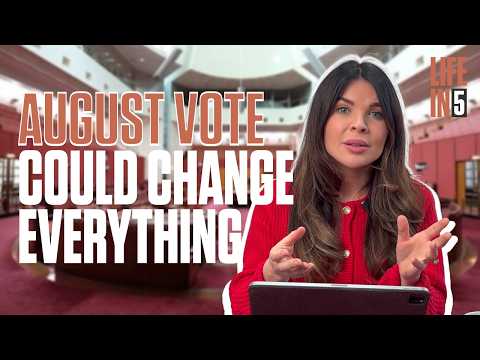
Ryan Batchelor's Push to Scrap the Telehealth Ban and Why the The Rural Access Argument is Wrong
Ryan Batchelor says rural patients are locked out of euthanasia access. The data says otherwise. Watch to understand what's really happening.
This episode breaks down Ryan Batchelor's push to scrap the federal telehealth ban on voluntary assisted dying consultations, carried at Labor's national conference despite doubts from the party's own Attorney-General. It tests his rural access argument against Victorian and South Australian VAD Review Board data, which shows regional patients are already being reached roughly in line with population share. The real gap isn't access to euthanasia, it's palliative care funding, and that's where the investment should go. The episode previews the parliamentary vote expected when Parliament resumes in August.
-
 29/7/26
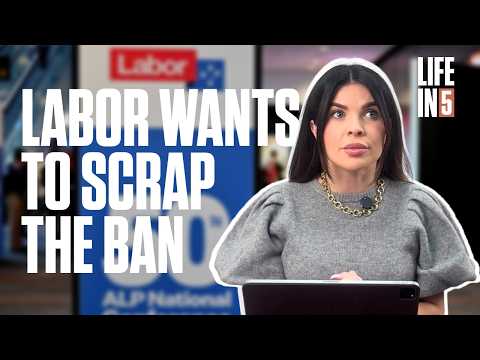
Labor's Telehealth Vote: Why Albanese's Own Party Wants to Undercut Assisted Dying Safeguards
Labor's national conference just voted to scrap a safeguard on assisted dying telehealth. The Prime Minister objected. His own party voted around him anyway. Watch to understand what actually happened, and what's still to come. This week on Life in 5, we break down the outcome of Labor's national conference in Adelaide, where delegates voted to commit federal Labor to removing telehealth restrictions on voluntary assisted dying and to guarantee MPs a conscience vote on the issue. The episode looks at what that vote actually changes (and doesn't), why Victoria's own experience shows how fast safeguards get loosened once a scheme is up and running, and why the real access gap facing rural and regional Australians sits in the palliative care workforce, not in euthanasia itself.
-
 22/7/26
New Aged Care Right to Palliative Care: Tasmania's Funding Just Got Cut
The government just gave dying Australians a new legal right to palliative care. Weeks later, it cut funding to a program already delivering it in Tasmania. Watch to understand what's really happening. This year's aged care reforms finally wrote a right to proper end-of-life care into law, closing a gap that saw people lose vital support if they lived longer than doctors expected. But days after Tasmania revealed the Federal Government had cut funding to a program that had already helped thousands of aged care residents die in their preferred place, the Federal Health Minister was asked what responsibility he'd take, and pointed to the system built to replace it rather than the people falling through the gap right now. On Life in 5, we look at what the new right actually delivers, what's already been lost, and why the gap between palliative care and euthanasia policy in Australia keeps widening.
-
 15/7/26
How Real Palliative Care Defies the Push to Drop VAD Safeguards
Only 38% of Australians who need specialist palliative care actually receive it. As the health system faces historic rationing, media and advocacy groups are shifting focus toward expanding access to voluntary assisted dying. Watch to understand what's really happening. In this episode of Life in 5, we look at how assisted dying trends in Australia are impacting the broader healthcare landscape. When financial pressures force hospitals to restrict palliative support, the easiest paperwork option risks becoming the default pathway. We explore how one woman’s remarkable story challenges the entire narrative surrounding modern end-of-life care.
-
 8/7/26
The Fight Against False Compassion
Voluntary assisted dying is now law in every Australian state, and Tasmania's own legislation is undergoing its first statutory review in 2026. We spoke with Anne Sherston of the Human Life Protection Society to talk about what “safeguards” really mean once a euthanasia law is in place, why an ageing membership is one of the movement's biggest challenges, and why she believes the churches have gone quiet on the issue.
-
 10/6/26
The Parents Who Let Their Daughter Die & ACT Euthanasia Expansion
A case involving a young woman ending her life through starvation in the Netherlands and a subsequent government initiative in the Australian Capital Territory to review voluntary assisted dying frameworks mark significant developments in end-of-life practices. These events unfolded amidst shifting regulatory landscapes, involving familial support in the European case and proposals to re-evaluate patient decision-making capacity requirements in Australia. These developments raise fundamental ethical and legal questions regarding the normalization of assisted death for psychological suffering, the boundaries of established medical safeguards, and the protection of vulnerable individuals.
-
 27/5/26
Abandonment Dressed as Compassion
Recent public debates have centered on a young South Australian woman approved for voluntary assisted dying and the legal conviction of a citizen under overseas abortion facility buffer zone laws. These events unfolded alongside calls from political figures to repeal similar safe access zone legislation within Australia, drawing connections between international speech restrictions and domestic legal enforcement. Ultimately, these developments raise fundamental questions about whether state-sanctioned medical choices reflect true compassion or societal abandonment, alongside the shifting boundaries between public safety regulations and the freedom of peaceful expression.
-
 13/5/26
Death on Demand: How Australia's Euthanasia Lobby Is Coming for Your Nursing Home
Public advocacy reports and media coverage in Australia are pressuring residential aged care facilities to expand access to voluntary assisted dying, drawing pushback over the removal of original legislative safeguards. Meanwhile, an official administrative report in the United States alleges that federal law enforcement personnel coordinated with abortion-rights groups to selectively target and prosecute faith-based activists. In a separate American legal development, a Supreme Court ruling has permitted the ongoing distribution of chemical abortion medications via mail and telehealth while lower-court regulatory challenges continue. Collectively, these situations highlight an expanding global debate regarding the erosion of institutional safeguards, the preservation of civil liberties for religious advocates, and the state-level regulation of medical interventions.
-
 6/5/26
$13,000 for Death, Silence on Suffering, and the Clock Running Out on Life
A British woman experiencing severe grief and psychological trauma traveled to a Swiss facility to end her life through assisted suicide, raising questions about evaluation criteria for non-terminal individuals. Meanwhile, the decision of a prominent Australian broadcaster to utilize voluntary assisted dying following a cancer diagnosis has prompted public discussion regarding the cultural impact and subtle pressures surrounding high-profile end-of-life choices. Additionally, an impending expiration deadline for a federal funding freeze on major American abortion providers has mobilized legislative and advocacy efforts, drawing parallels to the manner in which bioethical laws are advanced domestically. Collectively, these situations highlight a broader global conflict over the regulation of medical interventions, the transparency of the legislative process, and the ethical responsibility of communities to support vulnerable individuals.
-
 22/4/26
Record Abortions, Assisted Dying Expanding, and the Insider Who Blew the Whistle
Planned Parenthood’s latest annual report detailing an increase in abortion procedures alongside a reduction in health screenings has renewed debates over institutional priorities and government funding. Meanwhile, the legal implementation of assisted suicide in New York has drawn scrutiny from critics who point to the expansion of end-of-life criteria in Canada as a cautionary precedent for other regions. Additionally, a former clinic director has transitioned into global advocacy after successfully pursuing legal action against her previous employer over internal safety and administrative violations. Collectively, these developments highlight an international discourse concerning the operational transparency of healthcare organizations, the legislative trajectory of voluntary mortality, and the ongoing efforts to shape societal values regarding human life.
-
 8/4/26
What They’re Not Telling You About Euthanasia & This Viral Case
The Northern Territory and the Australian Capital Territory are currently drafting legislation to legalize voluntary assisted dying under specific criteria, prompting debates regarding the long-term reliability of statutory safeguards. Concurrently, public controversy has emerged over media coverage surrounding the arrest of a Georgia woman, with critics alleging that news outlets misrepresented a homicide investigation as a prosecution under state abortion laws. Meanwhile, Scotland’s Parliament held a vote on a proposal to legalize assisted dying for terminally ill adults, featuring intense deliberation from lawmakers and disability advocates over the potential for patient coercion. Together, these narratives underscore an ongoing international discourse regarding the statutory regulation of medical procedures, the transparency of public reporting, and the ethical responsibility to protect vulnerable populations.
-
 1/4/26
The Slippery Slope No One Wants to Talk About
Recent polling data from The Australia Institute regarding domestic abortion attitudes has highlighted a persistent alignment with broader Western societal trends despite ongoing questions surrounding data presentation. Concurrently, new academic research from the University of Queensland recommends expanding voluntary assisted dying frameworks through remote telehealth consultations, prompting debate over the potential reduction of original clinical safeguards. Meanwhile, reporting from the United Kingdom highlights a youth-led resurgence in faith and public advocacy, exemplified by a university student establishing localized chapters for digital and community engagement. Collectively, these developments underscore an ongoing global discourse regarding the limitations of statutory frameworks and the intersection between public policy and the cultural valuation of human life.
-
 25/3/26
When Care Becomes Death
Official health data from Ireland indicates that infants have been born alive following abortion procedures and subsequently died, raising questions about the legal and medical obligations of healthcare providers when a termination results in a live birth. Concurrently, a review of Canada's Medical Assistance in Dying program reveals instances of rapid, same-day approvals alongside concerns regarding potential undue influence and limited access to alternative palliative care resources. Furthermore, emerging medical analyses and case reports challenge the predictability of assisted dying procedures, citing a lack of comprehensive protocol data and inconsistent tracking of clinical complications. Collectively, these international developments highlight a critical global debate surrounding the enforcement of medical safeguards, institutional accountability, and the ethical responsibilities governing end-of-life and reproductive healthcare.
-
 18/3/26
Assisted Dying Is Rising in Australia? And Why Won't Canva Respond?
The rapid expansion and normalization of voluntary assisted dying protocols across multiple Australian states have drawn significant scrutiny regarding the shifting patterns of end-of-life choices. This growth occurs alongside ongoing resource challenges in regional healthcare infrastructure, where limited access to specialized palliative care and strain on medical personnel complicate the availability of patient options. Meanwhile, corporate accountability campaigns are targeting a prominent graphic design platform over its employee reproductive travel benefits and its lack of public engagement with advocacy groups and faith-based educational institutions. Collectively, these issues underscore an emerging conflict over institutional healthcare priorities, corporate involvement in bioethical matters, and the structural protections afforded to human life.